Collection contract
You receiveScheduled pick-up, weighing, consignment note, certificate, each batch traced in Pi.
You gainA compliant site, with demonstrated take-back.
Reduce electrical and electronic waste through traceable collection, and turn it locally into raw materials.
ForBusinesses, banks, hotels, schools, municipalities, solar operators, donors
The electrical and electronic waste resource is immense: approximately 77,000 t per year in Cameroon, with less than 1% formally collected in sub-Saharan Africa. A used battery stored on site is a fire risk and a liability: its treatment must be demonstrable.
Scheduled pick-up, weighing, consignment note, certificate, each batch traced in Pi.
You gainA compliant site, with demonstrated take-back.
Bins installed, collection campaigns in street waste, regular pick-ups, residents informed.
You gainA visible public service, hazardous waste removed from urban areas.
Fleet inventory, compliance plan, reporting.
You gainA precise baseline assessment and a compliance pathway.
The resource is immense and almost none of it is collected. We intend to actively solve this problem, throughout the country.
426 kg handed over on 18 June 2026.
Solidarité Technologique already collects and processes electrical and electronic waste in Cameroon. With it, our bins rely on a network, a workshop, trucks and 426 kg handed over on 18 June 2026.
Riffle splitter, rotary splitter: every test starts from a sample representative of the lot.
Ceramic jar and balls: controlled particle liberation, before separation.
Ro-Tap sieve shaker, wet screening at 38 µm: copper and aluminium remain on the sieve.
The Falcon L40 UF concentrator separates particles at 300 G, without reagents.
At 1.5 T, the WHIMS retains the cathode material; the graphite passes through.
Selective leaching, vacuum filtration, washing: what remains is purified graphite.
Factory-in-a-Box: containers designed to be placed where the batteries are. Black mass is produced, separated and purified on site, in Africa.
Drag to compare.
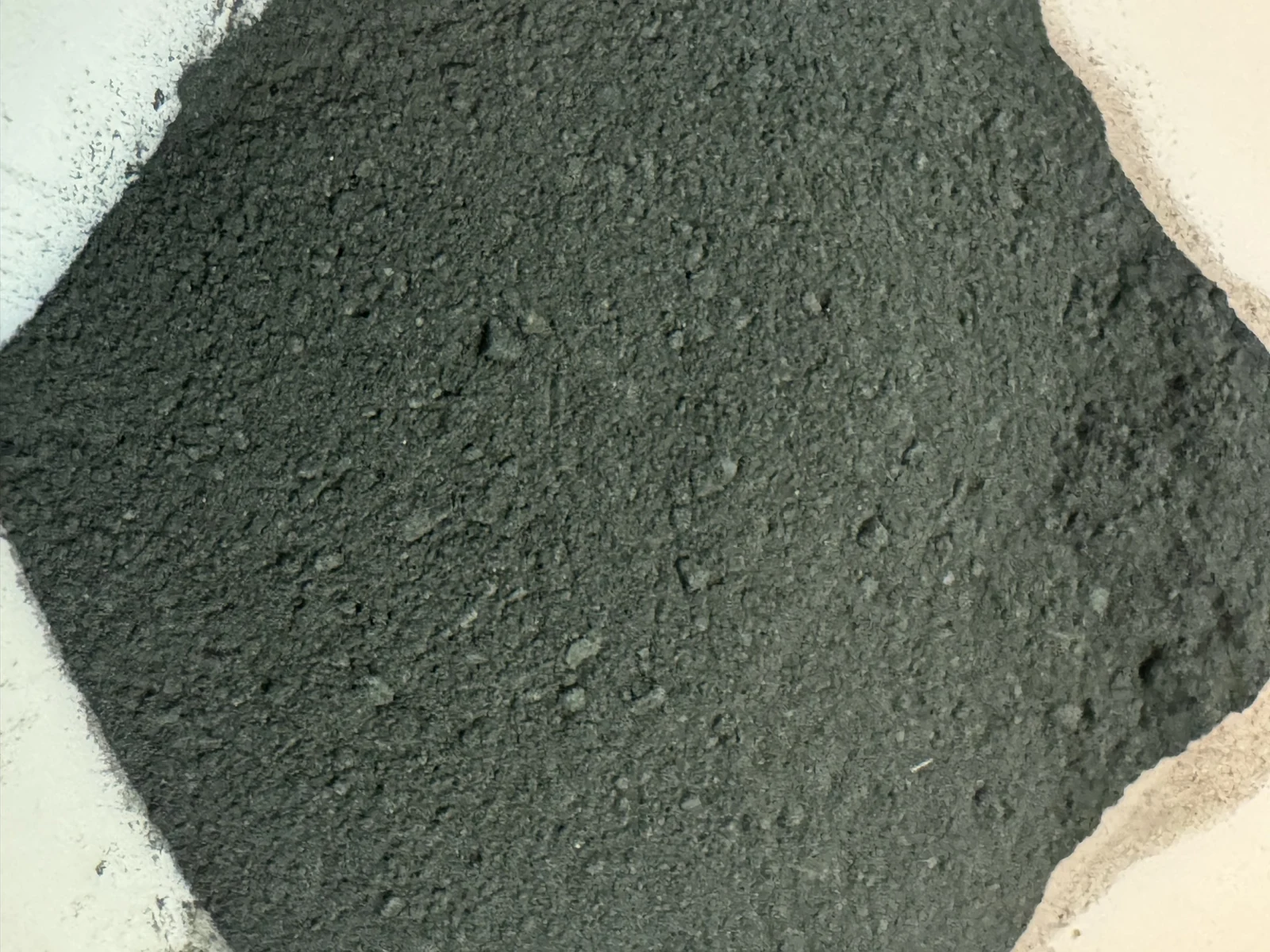
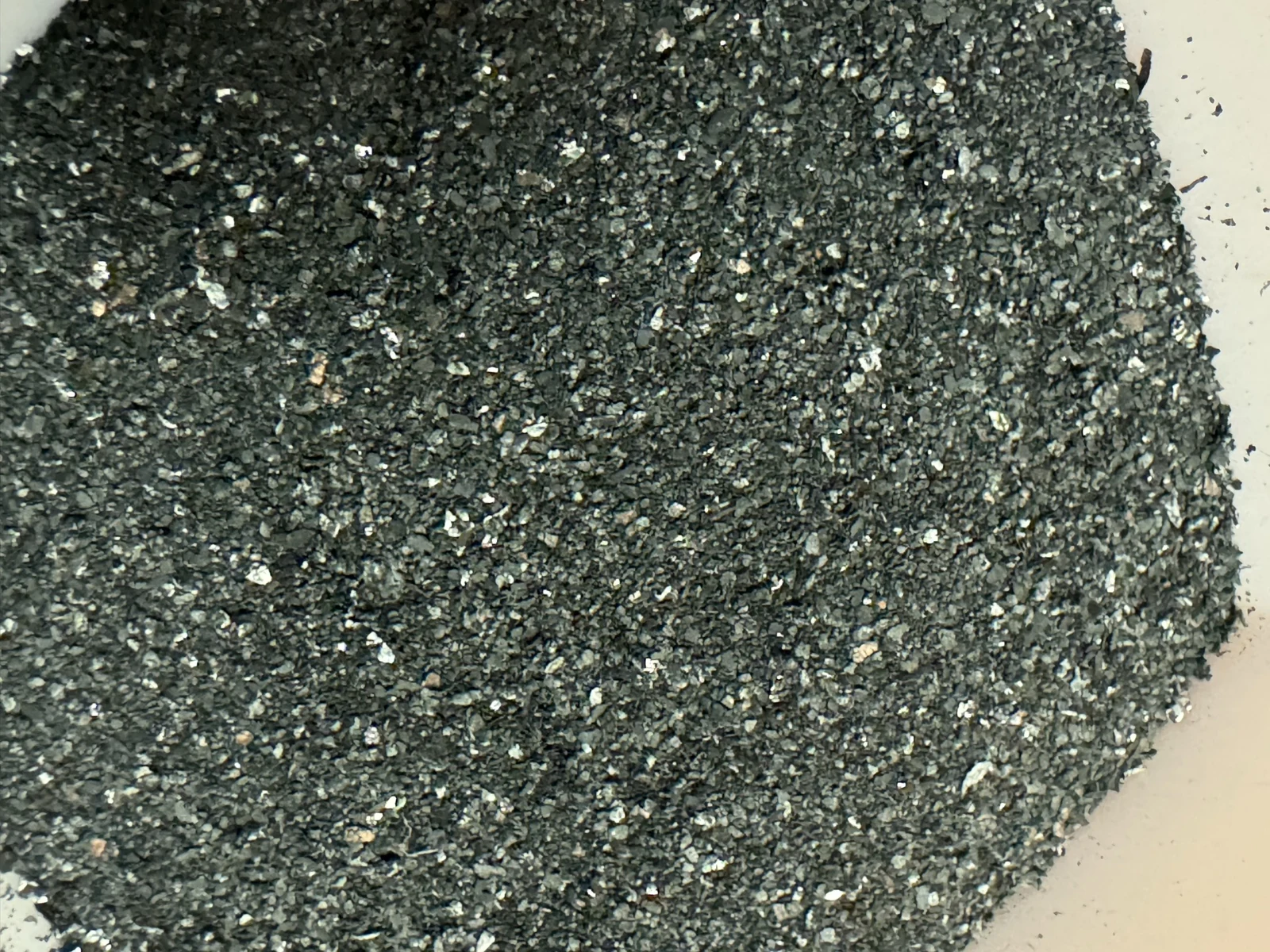
Initial black mass, then purified graphite
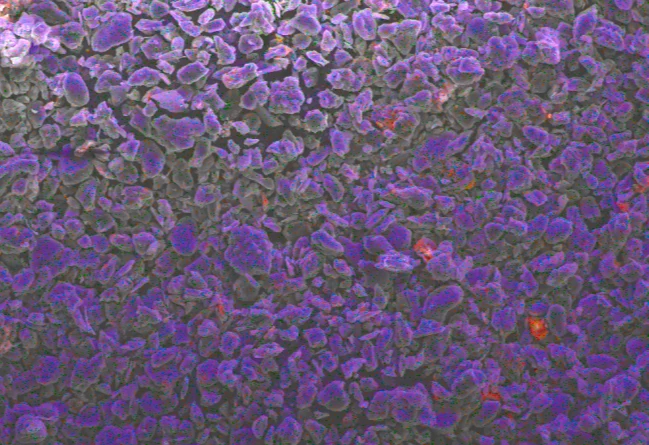
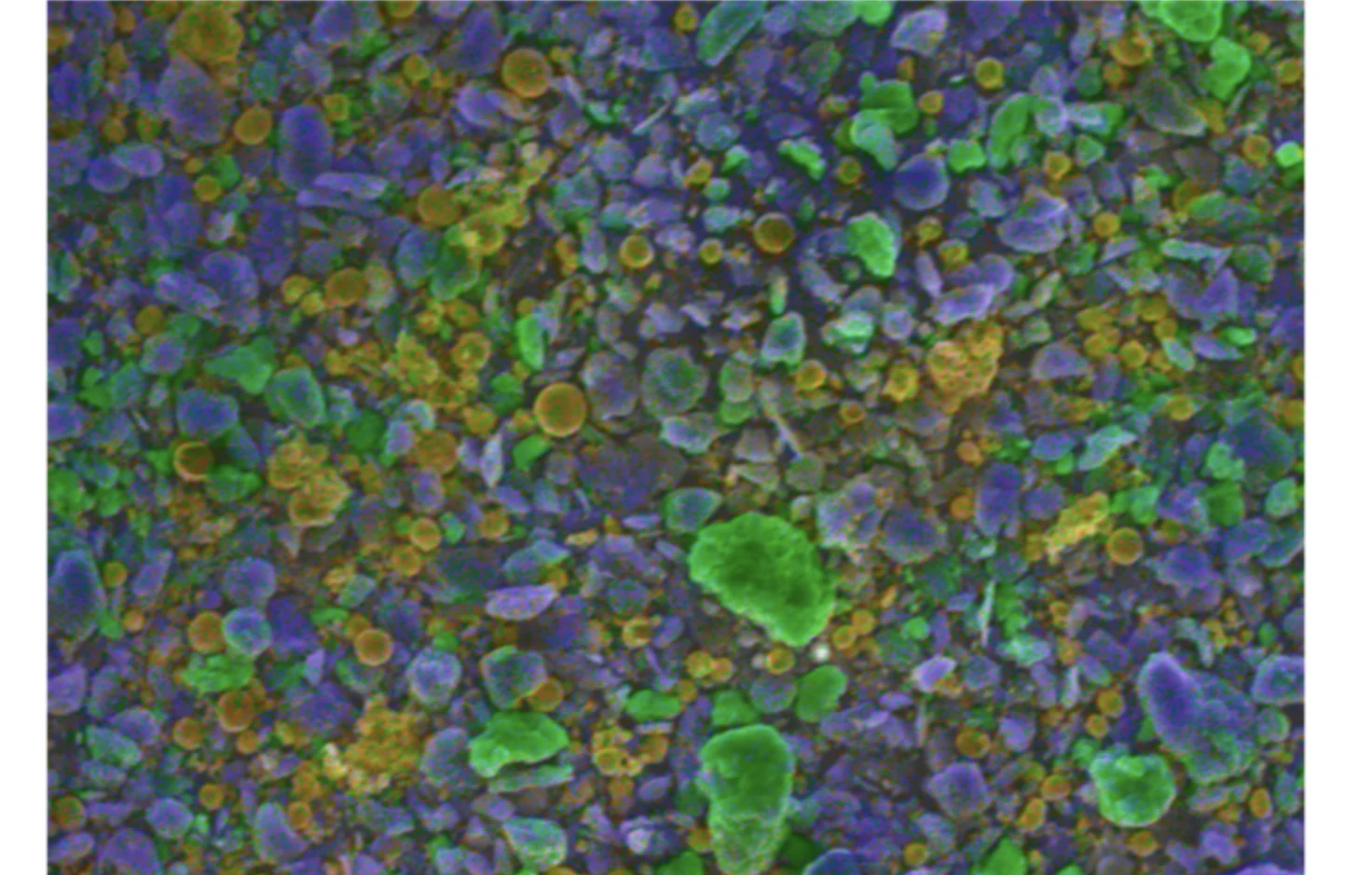
EDS map of the black mass, then EDS map of the purified graphite
The prototype we manufacture: cells, batteries and power banks, e-cigarettes and small devices, each in its own bin, each with its own code. 103 × 48 × 150 cm.
For: Small offices, schools, administrations, pharmacies, laboratories
What goes inCells, phones, small appliances
For: Shopping centres, hospitals, hotels, banks, service stations, universities
What goes inCells, batteries, UPS units, computers
For: Industry, telecoms, mines, warehouses, garages, solar installers
What goes inInverter and telecom tower batteries, equipment batteries, modules
For: Military, large telecom networks, solar power plants, industrial storage
What goes inFleet batteries, storage, complete packs
Projection images.
Stations for offices, banks, hotels, restaurants and schools, with collection on request. 426 kg were handed over on 18 June 2026 with Solidarité Technologique, our collection partner.
Discharge, opening, sorting: the assembly read in reverse. Batteries still in good health go to second life.
Cathode on one side, graphite on the other, through physical separation (Falcon, WHIMS, flotation) before any chemistry: a process developed from our doctoral research.
Leaching and filtration complete the purification: in the laboratory, the graphite rises from 74.6% to 98.2% carbon by XRF, and is then tested as an anode at the University of Birmingham.
A one-off pickup, with weighing and waste manifest.
Collection stations installed, regular pickups, trained staff.